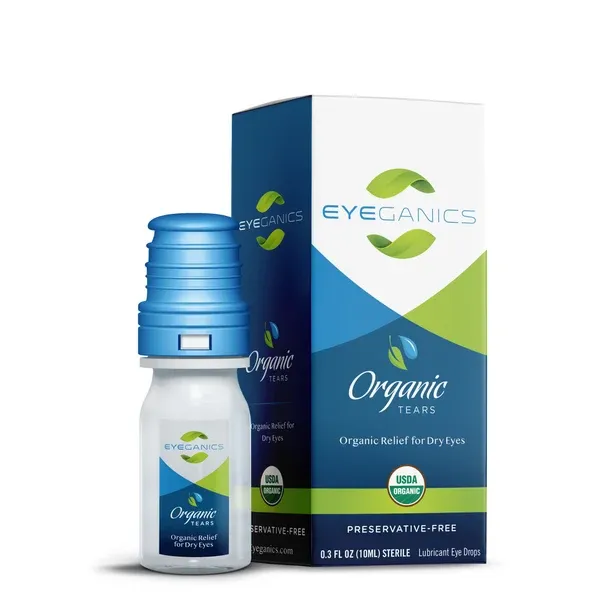
EYEGANICS
Share
$29.99
Sold out
Sold out
EYEGANICS
Share
Customer reviews
Customer reviews
Reviews only from verified customers
No reviews yet. You can buy this product and be the first to leave a review.
Product details
UPC: 86000503490
Brand: EYEGANICS
Eye drops are systemically absorbed into the bloodstream, in varying degrees via their absorption through ocular tissues, the nasolacrimal tract and when swallowed. The eye drops we take can affect our bodies. With that in mind, the facts surrounding non-organic eye drop ingredients are compelling and raise a lot of questions.
Instead of a bunch of artificial chemicals in a bottle or vial, Eyeganics offers effective dry eye relief by using only three ingredients, without additives or preservatives: oil from organic vegetables, water, and salt. That's it. Eyeganics’ patent-pending eye drop formulation is certified organic by the USDA. Certified organic drops are guaranteed to have: no GMO’s, no synthetic chemicals, no chelating agents, and no artificial ingredients. Because, really, who wants any of that in their eyes and body?
Eyeganics is remarkably refreshing and extremely effective at relieving dry eye symptoms - because of its organic purity and simplicity. While artificial chemicals and the long list of nonsense in conventional eye drops can provide temporary relief, the long-term effect may oftentimes be to make dry eye worse.
Chemicals Used in Non-Organic Eye Drops
Boric Acid (Buffer found in over 90% of eye drops currently sold in the US): The European Chemicals Agency recently classified boric acid as a “substance of very high concern” with the warning “may damage fertility, may damage the unborn child.”1 Although it does not appear to be carcinogenic, studies in dogs have reported testicular atrophy after exposure to high doses for 90 days.2 The chemical is used in household kitchen products to control cockroaches and ants.3
Sodium Hyaluronate (Common eye lubricant): the salt form of Hyaluronic Acid, this lubricant has traditionally been extracted from the cartilage of rooster combs (the fleshy crest on the top of rooster’s heads).4,5 “Cruelty-free” sodium hyaluronate is now more common, and is produced in a lab through genetically modified bacterial fermentation. The bacteria most commonly used in this synthetic process is the highly pathogenic Streptococcus zooepidemicus, and it is sourced from horses and fish in a variety of ways: horse nasal swabs, mussel processing wastewater, eviscerated tunafish waste, etc.6-8
Carboxymethylcellulose (Common eye lubricant): commonly used in processed foods and thought to induce inflammatory bowel disease. Has repeatedly been shown to cause disruption of the gut epithelial barrier and dysregulation of the immune response in the gut microbiome.9-11 Given the similarities between gut and ocular membranes, possibly increases irritation and inflammation of eye.12,13
Polyethylene Glycols (Common eye lubricants): the presence of contaminants in these compounds is of concern, including 1,4-dioxane and ethylene oxide, which are known to be carcinogenic and/or highly volatile.14,15 Manufacturers must “continue their efforts” to remove these harmful impurities and by-products.16 Furthermore, animal studies have shown polyethylene glycol to be damaging to the retina when injected intravitreally.17,18
Propylene glycol (Common eye lubricant): an ingredient in antifreeze, this chemical is associated with skin irritation and allergic reactions, while also being potentially toxic to the kidneys and liver.19-22
Glycerin (Conventional/Non-Organic): often obtained from palm oil. Palm oil plantations are considered one of the biggest causes of rainforest destruction and deforestation worldwide.
All of the chemical ingredients listed here are generally recognized as safe by regulators, and are used at relatively low concentrations in eye drops. These pharmaceutical ingredients have been in long-term use without evidence of toxicity. However, the safety testing of these chemicals has generally sought to rule out the possibility that their usage would cause immediate poisoning, or that its ongoing usage would cause cancer. This safety evaluation process is, understandably, not designed to detect more subtle adverse outcomes that could result from long-term daily usage.
Powered by Lightspeed
Display prices in:USD
